Tuesday, February 2, 2010

High Prices Not Barriers For Streetfighter Ducati Enthusiasts

Streetfighter Ducati
High Prices Not Barriers For Streetfighter Ducati Enthusiasts

Although expensive, Ducati got its own place for the speed lovers across the country. Proved, although recently introduced last Sunday, two new variants of Ducati Streetfighter Ducati and Ducati's 1198 Superbike in demand booked customers. Even from the four units ordered, type S or type a lot tertinggilah selected.

Although newly launched, had ordered four units of two types of S Streetfighter and two Ducati Superbike 1198 S, said President Director of PT Supermoto Streetfighter interrupted and the launch of Ducati 1198 Ducati Superbike weekend.


Ducati monster Specification | Ducati Streetfighter


Specifications Ducati Superbike 1198


Preview 1198 Ducati Superbike and Ducati Streetfighter:

And Ducati type S is a type of high enough from their variants. Because in all variants of Ducati with the type S has applied technology aka DTC Ducati Traction Control System) which is a feature that can control the tire traction motor that makes this bike extremely safe to drive in high speed despite being in the rain though.

Ducati motorcycles with the type S also been strengthened by Ohlin shock which proved very capable of vibration damping.

Type S has a price difference of about USD 5,000 compared to the usual type, but because it already had DTC and Ohlin, including the cheap price. Because if they put themselves, would require funding of at least EUR 7000

His best-selling these motors is understandable, because with the big name Ducati and powerful forces that are stored in the kitchen runway, the presence of this motorcycle, would make the speed enthusiast will be pleased.

And the price variance is not exactly cheap. Because variants Ducati Ducati Streetfighter sell each type of 410 million for the 'ordinary' and 450 million for the type of S.

While Ducati Superbike 1198 sold 450 million price for the standard and 500 million for Superbike version of S.

And despite a purchase price of the bag draining enough, in the year earlier in 2008, PT Supermoto was still able to sell up to 24 units of Ducati and until last September.

It's worth it for the passion and the Ducati engine power which is different from other motor sport

Monday, February 1, 2010

New Mercedes Benz E 63 AMG 2010 Modification

new mercedes amg gullwinWant a recipe for a super-exciting four door sport sedan? Drop in a handbuilt AMG powerplant from your most expensive sports car into the otherwise-tame 4 door E-Class, boost the suspension and slow-down-and-stop, add some bling and call it a day. The 2010 Mercedes-Benz E63 AMG gets the same powerplant as AMG's own SL63, and on-road experience in the latter car shows this motor is truly breathtaking.

Say what you will about the new 2010 E-Class's styling, but in AMG trim the rather ordinary new E gets its chance to look good for the cameras, if you manage to catch one on the road going slowly enough to get a good look.

The E63 AMG is more than a new body and a big motor, and seems to have received the little touches that will allow it to finally compete with the best from BMW and Audi in the driving dynamics department. The E AMG no longer uses a torque converter psuedo-manual, canning that outdated technology in favor of a 7-speed automanual featuring a wet-sump clutch constantly submerged in an oil bath for smooth shifts and protection against wear.
new mercedes amg silverThe E63 suspension system is completely revised, with a new steel-springed strut setup up front and an AMG-specific air suspension out back, with all the expected launch and stability controls and other annoyances. Thankfully, the nannies can be sent home for the most part when the 2010 E63 AMG is put into sport mode.

Deliveries for the latest and greatest E-Class begin this August in Europe, with a US release date quick to follow in November 2009. Base price info has not yet been released, but expect something in the $70,000-$85,000 range.

-RSportsCars

The E 63 AMG – the new generation of dynamic, sports saloon with day-to-day suitability

Official Mercedes-Benz Press Release

Affalterbach – AMG is kicking off the new 2009 motoring season with a new dynamism: shortly after the launch of the new E-Class, the high-performance brand within Mercedes-Benz Cars is presenting the new E 63 AMG. This dynamic sports saloon with day-to-day suitability impresses with outstanding performance, thrilling handling characteristics and a technology transfer from the SL 63 AMG high-performance Roadster.

The new E 63 AMG distinguishes itself from the regular Mercedes-Benz E-Class models with a completely newly developed AMG RIDE CONTROL sports suspension with electronically controlled damping and a new front axle, and with its autonomous exterior and interior design. At the same time Mercedes-AMG has achieved a reduction in fuel consumption by almost 12 percent for the new E 63 AMG, thanks to the concerted use of fuel efficiency measures. With its unique combination of pioneering driver assistance systems, the E 63 AMG further consolidates the brand's leading position in the field of automotive safety.

The AMG 6.3-litre V8 engine in the new E 63 AMG develops a power output of 525 hp and a torque figure of 630 Nm, matching the outstanding figures for the SL 63 AMG. The high-performance Roadster has also donated its AMG SPEEDSHIFT MCT 7-speed sports transmission to the new model. It dispenses with a conventional torque converter and uses a compact, wet start-up clutch. In conjunction with the four individual driving modes, the throttle-blipping and RACE START functions, the resulting, direct connection to the powertrain allows an extremely emotional and highly dynamic driving experience.

The drive unit is unique in this segment, and ensures sporty performance figures: the E 63 AMG accelerates from 0-62 mph in just 4.5 seconds, with a top speed of 155 mph (electronically limited). The fast-revving, naturally aspirated engine with a displacement of 6208 cc impresses with its agile responsiveness, muscular power delivery and great flexibility. The newly composed AMG V8 sound is a thrilling accompaniment mile after mile, while the smooth-running engine guarantees typical Mercedes-Benz long-distance comfort. A newly designed water cooling system ensures maximum endurance even under the enormous dynamic stresses of the racetrack.
new mercedes slc amgFuel consumption cut by almost 12 percent

Despite 11 hp of additional output versus the preceding model, the fuel consumption of the new E 63 AMG has been significantly improved. It now returns 22.4 mpg, 2.6 mpg more than then previous car (NEDC combined consumption, provisional figure), and leads the field among sports saloons developing more than 500 hp. This progress has been made possible by a package of efficiency-enhancing measures. These include on-demand delivery of fuel and generator management with recuperation of braking energy on the overrun, both of which are standard in the new E 63 AMG. In-engine friction is also reduced by the AMG-exclusive twin-wire arc spray coating process used on the cylinder walls.

The AMG SPEEDSHIFT MCT 7-speed sports transmission also makes a decisive contribution to fuel economy: a wet start-up clutch running in an oil bath replaces the previous torque converter. This unit responds extremely rapidly, dynamically and without the losses typical of a torque converter transmission thanks to its low rotational inertia. The transmission is equipped with four driving modes: "C" (Controlled Efficiency), "S" (Sport), "S+" (Sport plus) and "M" (Manual), which can be selected using a rotary electronic switch in the AMG DRIVE UNIT. Partial suppression of individual cylinders by interrupting ignition and injection during gearshifts under full load leads to considerably faster shift times. In M mode the AMG SPEEDSHIFT MCT 7-speed sports transmission allows gearshifts to be performed in 100 milliseconds.

In the even more fuel-efficient driving mode Controlled Efficiency, the transmission shifts the gears decidedly smoothly, and the transmission control unit is programmed to perform early upshifts to keep engine speeds as low as possible. At the same time the AMG SPEEDSHIFT MCT 7-speed sports transmission meets the most demanding requirements where driving dynamics are concerned: fast and precise multiple downshifts ensure first-class agility in conjunction with the automatic throttle-blipping and RACE START function: this enables the E 63 AMG driver to call on the maximum acceleration potential automatically.

Electronically controlled damping system and a new front axle
New mercedes benz C 2010Sporty or more comfort-oriented? The driver of the new Mercedes-Benz E 63 AMG is not obliged to accept any compromises in this respect. The AMG RIDE CONTROL sports suspension copes equally well with the agile manoeuvres of the racetrack and more comfortable, sedate driving. High performance and typical Mercedes-Benz long-distance comfort go together as an extraordinary synthesis in the E 63 AMG. This is made possible by the newly developed AMG RIDE CONTROL sports suspension. While new steel spring struts are used on the front axle, the rear suspension features AMG-specific air springs. The advantage of this solution, which is exclusive to AMG, is that the front spring struts ensure more sensitive responses while the rear air struts with their automatic level control system keep the vehicle at a constant height irrespective of the load.

A new, electronically controlled damping system automatically varies the damping characteristics according to the driving situation, reducing the roll angle of the body. The result is instant adjustment to provide the best possible ride comfort together with the greatest possible agility. In addition the driver is able to choose between the three suspension modes of Comfort, Sport and Sport plus at the touch of a button. The E 63 AMG is also equipped with a newly developed, dedicated front axle with a 56 mm wider track, a tubular stabiliser, new control arms, new wheel bearings, new elastokinematics and new wheel location for more negative camber – thereby providing more grip when taking bends at speed. The AMG-specific kinematics also ensure significantly more precision. This is a highly sophisticated axle design whose principle has already proved its worth in the C 63 AMG. The rear axle likewise has more negative camber, optimised elastokinematics and a new subframe mounting for greater stability at the physical limits.

Newly developed power steering and individual 3-stage ESP®

For more direct responsiveness, the speed-sensitive rack-and-pinion steering is also a new development. The steering ratio of 14 : 1 is 22 percent more direct than in the standard production models, while a more rigid steering column plus the reconfigured characteristic mapping of the speed-sensitive servo assistance ensure better steering precision and improved road contact.

The 3-stage ESP® familiar from the SL 63 AMG and C 63 AMG enables individual settings to be selected – with clear benefits in terms of driving pleasure combined with the same, high level of handling safety. The ESP® key in the AMG DRIVE UNIT allows the driver to choose between "ESP ON", "ESP SPORT" and "ESP OFF" – with the currently active mode shown in the central display of the AMG instrument cluster. Perfect deceleration even when driving extremely briskly is ensured by the AMG high-performance braking system with 360 mm, internally ventilated and perforated brake discs all-round. Particularly resistant, motorsports-tested composite technology is used at the front axle. Outstanding grip is ensured by the 18-inch AMG light-alloy wheels with a width of nine and 9.5 inches and mixed tyre sizes of 255/40 R 18 at the front and 285/35 R 18 at the rear.

Decidedly dynamic interior and exterior

The decidedly dynamic design of the E 63 AMG is fully in keeping with the uncompromisingly sporty technology. The front aspect is characterised by 17 mm wider wings bearing "6.3 AMG" lettering, the new AMG front apron with large air intake apertures and the AMG-specific daytime driving lights using LED technology. In conjunction with the standard Intelligent Light System, the E 63 AMG is equipped with tinted main headlamps. The striking visual presence is further enhanced by the AMG side skirts and AMG rear apron with a black diffuser insert. As a hallmark of the brand, the AMG sports exhaust system has two newly designed, chrome-plated twin tailpipes.

The newly designed interior of the E 63 AMG is an exciting blend of high-grade materials and functional sportiness. Exclusive features include the dedicated, electrically adjustable AMG sports seats with improved lateral support and the AMG sports steering wheel in a four-spoke design with AMG shift paddles. As a completely new feature exclusive to the E 63 AMG, the AMG selector lever has one-touch logic. Directly adjacent to it in the centre console is the AMG DRIVE UNIT, which provides adjustments for the MCT sports transmission, the ESP functions, the suspension set-up and the AMG driving modes. Standard equipment also includes high-grade nappa leather upholstery in three different colours, the AMG instrument cluster with an AMG main menu, door entry sills with AMG lettering and a sports pedal cluster – both in brushed stainless steel.

Even more individuality with tailor-made AMG extras

Customers requiring even more sporty individuality are catered for by the AMG PERFORMANCE STUDIO: the E 63 AMG can be dynamically enhanced with the Performance Package. This includes the following:

* Lightweight, forged 19-inch AMG light-alloy wheels with size 255/35 R 19 tyres at the front and 285/30 R 19 at the rear
* AMG Performance suspension with a stiffer set-up
* AMG rear axle locking differential with 40 percent locking action
* AMG spoiler lip on the boot lid
* AMG Performance steering wheel in a three-spoke design

Optional extras from the AMG PERFORMANCE STUDIO are also individually available:

* Lightweight, forged 19-inch AMG light-alloy wheels with size 255/35 R 19
tyres at the front and 285/30 R 19 at the rear
* AMG rear axle locking differential with 40 percent locking action
* AMG Exterior Carbon package
* AMG Performance steering wheel in a three-spoke design
* AMG carbon-fibre trim in the interior
* Illuminated AMG door entry sills
* AMG floor mats

Active and passive safety at a new level

The top AMG model in the E-Class range traditionally meets the very highest expectations with respect to active and passive safety. Naturally this also applies to the new E 63 AMG: standard features include the new drowsiness detection system ATTENTION ASSIST, the unique preventive occupant protection system PRE-SAFE®, Brake Assist PLUS, seven airbags and crash-responsive NECK-PRO head restraints. On request the safety features can be brought to a level unprecedented in this vehicle class with the Lane Keeping Assist and Blind Spot Assist systems, the PRE-SAFE® Brake with an automatic braking function which can bring the vehicle to a complete stop, Adaptive Highbeam Assist and Night View Assist.

The market launch of the new E 63 AMG will commence in August 2009. UK specifications are still to be confirmed.

New Bugatti Veyron Pegaso Edition 2010

new Bugatti Veyron Pegaso 2010Some times are for Michelob, and other times are for Cristal. The vehicle you see above and in the gallery below — the Bugatti Veyron Pegaso Edition — is one of the latter. Similarly, we're assuming there are some times we guess it's important for Russian oil barons to set themselves apart from the rest of the mere "filthy rich," and show the world they're actually part of the "ridiculously rich" club. Here's how one particular Russian oil baron did it. The man, who happens to actually live in Dubai's Burj Al Arab seven-star hotel, snagged himself a Bugatti Veyron and then decided it was necessary to spend a little bit more money with some pimper of autos who's recycling the name of an old Spanish coachbuilder that worked with Alfa Romeo and Ferrari during the 1950's to boost the output on the machine by an extra 200 horses. That brings the final number to an absolutely ree-dic-u-luss 1200 HP, and we're thinking may even pop that top speed well over the 250 MPH+ mark it's already at — unless of course it just explodes. But really, our only question here is — does the man wipe himself on the toilet with hundred dollar bills, or does he pay someone to do that for him? Oh yeah, and the going price we're assuming is significantly more than the $1.2 million for the standard Veyron.

Yamaha Vixion Modifications Streetfighter


Yamaha Vixion Modifications Streetfighter. Here also there modified motor honda tiger, scorpio yamaha, suzuki thunder

Yamaha motorcycle modification specification Vixion:
  • chrome engine
  • custom chrome body
  • upside down suzuki GSX
  • swing arm honda cbr
  • ducati monster wheel

Sunday, January 31, 2010

New Bugatti Veyron Modification 2010

New Bugatti Veyron ModificationThe All New 2010 Bugatti Veyron to Feature the W16 Engine and 4 Turbochargers!
The Veyron from the house of Bugatti is expected to come in the 16 cylinder W16 engine mounted in separate two banks of eight cylinders. The engine features with the 4 turbochargers and displaces 8.0 liter with the stroke and the bore of 86 mm and the 86 mm respectively. The vehicle is designed by Ricardo.
new bugatti veyron red blackThe transmission in the vehicle consists of Direct Shift gearbox with dual clutches, manual gearbox controlled by the computer with the 7 gear ratios, magnesium paddles next to the steering wheel and has the shift time of 150 Ms. The vehicle uses the Haldex traction system and provides the 4-wheel drive. The new Veyron uses the flat tires from the Michelin, which are specially designed for the Veyron to provide the maximum speed. The curb weight of the vehicle will be 2034 kilo grams.
Bugatti Veyron modificationThe wheel base of the Veyron is about 2710 mm, while the length, width and the height of the model are 4462 mm, 1998 mm and 1204 mm respectively. The Bugatti Veyron modification has 10 radiators in total - 1 hydraulic oil radiator for the spoiler, 3 radiators for the engine cooling system, 1 engine oil radiator, 1 heat exchanger for the air-to-liquid intercoolers, 1 differential oil radiator, 2 for the air conditioning system and 1 transmission oil radiator.
Bugatti Veyron machineThe engine in the vehicle produces 746 kilo watts of power and a massive 920 lb ft of torque. The maximum speed of the vehicle is about 400 kilo meters per hour, and the most fascinating part of the story is that the new Bugatti Veyron is capable of reaching the speed of 200 kilo meters per hour in just 7.3 seconds.
bugatti veyron handling accelerator

New Red Nissan GTR Supercar 2010

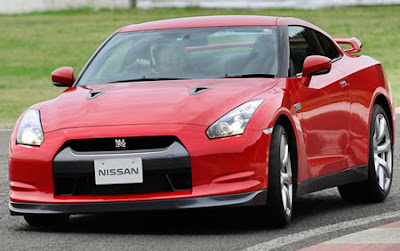
nissan gtr red
Supercars have always existed to keep our passion for automobiles on constant boil, and supercars that don't crest the six-figure mark are the best kind. They're almost attainable. The RED Nissan GTR 2010 remains that way for 2010 with a price bump to help pay for a few upgrades from the factory. The base model will begin at $80,790 and the Premium model at $83,040. According to Edmunds.com, the new MSRPs are both $3,950 more than what you would pay for a 2009 model.

What does an extra four grand get you? A lot actually, not the least of which is a 5-horsepower bump for the twin-turbo 3.8-liter V6, which nets a new grand total of 485 hp. Other additions include a retuned suspension with redesigned Bilstein shocks, an upgraded braking system with more rigid brake lines, standard front seat- and roof-mounted side curtain airbags for the base GT-R model, standard wheels for the GT-R with a darker finish and "near-black" metallic wheels for the Premium model. A new color is also available, Pearl White, and you get a polished front bumper now when ordering your car in Super Silver.
Red Nissan GTR 2010Oh, and there's one more thing: Nissan has given the GT-R new Transmission Control Module programming. The new code is said to increase durability and drop acceleration times with the Vehicle Dynamic Control activated. It should also put an end to concerns about damaging the transmission by using the vehicle's Launch Control with VDC turned off. Preliminary reports indicate that the 2010 GT-R is still faster than all get out with the new programming.
PRESS RELEASE
NISSAN ANNOUNCES PRICING FOR 2010 GT-R
2010 GT-R RECEIVES HP BOOST TO 485HP

FRANKLIN, Tenn. (March 16, 2009) – March may be the month known for madness, lions and lambs, but at Nissan North America, Inc. (NNA), the biggest roar is coming from the early introduction of the new 2010 Nissan GT-R supercar, including a number of important enhancements. Specifically, five additional horsepower, a revised suspension, updated wheel finishes and standard front seat- and roof-mounted curtain side-impact supplemental air bags.

First introduced in the United States in July 2008, the red Nissan GT-R earned near universal acclaim, including being named Motor Trend "2009 Car of the Year," Automobile magazine's 2009 "Automobile of the Year", and winning Kelly Blue Book's "2009 Best Resale Value Award."
Nissan GTR 2010 RedFor 2010, the horsepower rating of the GT-R's 3.8-liter twin-turbo V6 engine has increased to 485 hp (from 480 hp) and the car's high-performance, 6-speed, dual-clutch transmission receives new Transmission Control Module (TCM) programming designed to optimize clutch engagement for improved drivability, and improve vehicle acceleration with the Vehicle Dynamic Control (VDC) on (activated). In addition, the braking system has been updated with more rigid brake lines for improved durability, and the brake calipers now carry both the Brembo and Nissan logos. Finally, the GT-R's state-of-the-art suspension has been retuned with redesigned Bilsteinâ shocks with a new valve body design and revised spring and damper rates.

The base GT-R model is now equipped with slightly darker, high-luster, smoke finish for the 20-inch RAYS forged aluminum-alloy wheels, while a new "near-black" metallic wheel finish is standard on the Premium model. For 2010, one new color – Pearl White – is offered, while the Super Silver exterior color has been enhanced to include a polished front bumper.

For 2010, the Nissan GT-R will again be offered in two models – GT-R and GT-R Premium. All 2010 Nissan GT-Rs are equipped with a standard 3.8-liter twin turbo V6 backed by an advanced paddle-shifted, dual clutch rear transmission and a world's first independent rear transaxle ATTESA E-TS all-wheel drive system. The Manufacturer's Suggested Retail Price (MSRP)* is $80,790 for the GT-R, and $83,040 for the GT-R Premium model. Destination & Handling (D&H) is $1,000.

Two options and two accessories are available for the 2010 GT-R: The Cold Weather Package (no charge); Special Super Silver Paint ($3,000); iPodâ Converter ($400); and carpeted GT-R floor mats ($280). Complete pricing information is available on the attached sheet.

The 2010 GT-R will be available only through officially certified Nissan retailers that have met a number of strict sales, service and facility commitments, including dedicating a master technician to GT-R service, on March 21, 2009. A complete listing of the nearly 700 GT-R Certified Nissan dealers is available to consumers on NissanUSA.com.

In North America, Nissan's operations include automotive styling, engineering, consumer and corporate financing, sales and marketing, distribution and manufacturing. Nissan is dedicated to improving the environment under the Nissan Green Program 2010, whose key priorities are reducing CO2 emissions, cutting other emissions and increasing recycling. More information on Nissan in North America and the complete line of Nissan and Infiniti vehicles can be found online at www.NissanUSA.com and www.InfinitiUSA.com. or visit http://modif-and-otomotif.blogspot.com/

Nissan GTR 2010 Modification

Nissan GTR 2010 modificationBeing an automotive journalist is like being a male porn star. We're little more than Piloti-shoed buffers between the reader and the objects of their lust, and really, no one cares about us. Still, you only get one chance to make an initial impression, so my first review here on Autoblog had to be big. As luck/fate would have it, I got a phone call a few weeks back that went a little something like this: "How'd you like to drive the first 2010 Nissan GTR on the West Coast, before the buff books get it?" Needless to say, the answer was obvious. But what to do with the brand-new R35, one of the most heavily and relentlessly covered car-stories of the past year? This takes us right back to that porno metaphor: How do I give the people what they want?
Nissan GTR 2010 Modif WallpaperWe hatched a plan – take the uber-Nissan down to San Diego and pay a visit to Comic Con! A story about 400-pound guys in Batman suits drooling all over the new GT-R practically writes itself, so we contacted various video game companies to see if they would let us drive the GT-R right onto the convention center floor. Perfect! Our stunt would be like lowering a nude, greased-up Megan Fox into a frat house. What could possibly go wrong? Without getting into the epic fail of that last bit, it didn't happen. What you're left with then is yet another review of a Nissan GTR 2010 Modification where some "pounding at 11/10s" wannabe hamfists Godzilla through envy-inducing, tight, twisty Southern California canyons. Lucky you... err, me.
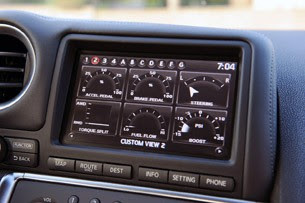
modification of Nissan GTR 2010My task then would be to answer the following: There's endless talk about whether or not the Nissan GT-R 2010 modif has a soul. Yes, we all know it's supercar quick and hypercar capable. And yes, Japan's most recent foray into the segment can utterly dominate and humiliate most British, Italian and German machines – all costing two, three or five times as much – and give like-minded American all-stars a run for their ACR/ZR1 money. But is the GT-R anything more than a numb supercomputer, mindlessly parsing bits of data and then spitting out traction and velocity? Are its capabilities a credit to Nissan's mechanical engineers, or its electrical wonks? To put it another, more Comic-Conny way, is there a ghost in Nissan's machine?
Modification of Nissan GTR 2010The big news is bye-bye launch control.
First and foremost, we should cover what's new for 2010. The big news is bye-bye launch control. We found the GT-R's penchant for grenading transmissions humorous (from a distance), but alas, farewell. However... maybe it's still there? Maybe Nissan was only telling people launch control had been deleted? We found a very deserted stretch of road, put the transmission and suspension into R mode, turned the VDC all the way off, planted our left foot on the brake pedal and pushed the throttle with our right. Instead of the tach zinging up to 4,500 rpm, fuel cutoff happens right around 2,000 rpm. Launch control is deader than last Thanksgiving's turkey. That's not very soulful.

That said, the Transmission Control Module (TCM) has been reprogrammed. Not only can the six-speed dual-clutch gearbox shift faster (when in R), but the chances of a customer having to shell out $20,000 for a new cogswapper is greatly reduced. The 2010 GT-R also sports five more horsepower, bringing the total to 485, while torque output remains unchanged at 434 lb-ft. Rumors still persist that since each GT-R engine is hand-built, power levels vary and some engines churn out as much as 520 hp, if not more. Let's chalk this up to some engines running 100 octane and others dealing with California's crapola 91 high-test. Bottom line, the power feels freakishly adequate.
Nissan GTR 2010 SilverThe suspension's been retuned and the Bilsteins are a new design, while the brakes (somehow) have been revamped and fitted with more rigid lines and fresh pads. Our Premium GT-R tester arrived with dark, "near-black" wheels and when coated in Super Silver (like this car) you get a polished front bumper (there's also a new hue called Pearl White). More power, faster shifts, better handling, stouter brakes, blacker wheels and a transmission that's much less likely to eat itself? That sounds fantastic. Soulful, even.


You cannot fit your hand between the front and rear thrones.
As far as looks go, let's face it: You've been staring at the GT-R through your computer screen for as long as I have. Not a single body panel was changed for 2010, so you either love it, or you're indifferent. I will say this, Godzilla is huge. I knew the Nissan was a big boy, but it's nearly ten inches longer than a C6 Corvette; its wheelbase is fifteen inches longer than a Porsche 997. But hey, we were able to fit a case of wine and a large pizza in the trunk, so I'm sure owners aren't complaining too much about the GT-R's dimensions.
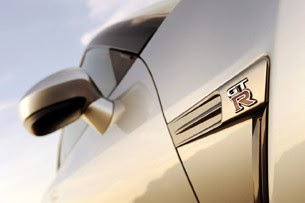
Nissan GTR 2010 modification pictureWell, maybe a little about the back seat. No joke: You cannot fit your hand between the front and rear thrones. Even children would be miserable. As far as the front of the cockpit goes, for a Nissan, it's pretty much okay. For an $86,000 vehicle, it's not nearly as nice as you'd like. Sure, there's leather all over the doors and on part of the dash, but it's budget, cheap-feeling leather, not that opulent, veal-fat rubbed and pleated cowhide you'd find in a Spyker. However, all that really matters is the usable stuff. The pedals, steering wheel, flappy-paddles, seats and handbrake are all up to supercar snuff. Especially that burly handbrake.


So then, how's it drive? In a word, Supercalifragilisticexpialidocious. From a standing start, the forward thrust is obscene. Pornographic, to stick with our earlier metaphor. 60 mph happens in less than four seconds (thanks to launch control delete, the GT-R no longer hunts in the 3.2/3.3-second Enzo/ZR1 woods) and the quarter-mile is annihilated in less than twelve. Trap speed? 120 mph, give or take. Top speed? North of 190 mph.

All these numbers are as quick or quicker than a $200,000+, all-wheel drive, paddle-shifted, 552-horsepower Lamborghini Gallardo LP560-4 or a $280,000 502-hp Ferrari F430 Scuderia. But forget about the numbers, the price tags and the competitor's badges. Instead, concentrate on the massive brutality taking place and hair-splitting wail of the turbos at full clip. You get to watch the scenery deform all around you as the buzzing builds to full cresendo. After giving one pal a quick blast up an empty freeway, he didn't want to shake hands because his palms were so sweaty. The GT-R is a face-puller, a neck-snapper, a pulse-pounder. Especially when you're banging off shifts in half a second with one of the world's finest paddle-shifted dual-clutch gearboxes. And that's in default. Pop the transmission into R-mode and the shifts are over and done with in two-tenths of a second. Bloody hell, indeed.
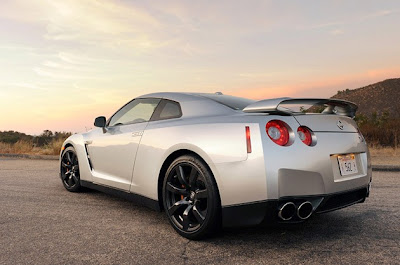
Nissan GTR 2010 ModifYeah, yeah, yeah -- 485 hp cars with 434 lb-ft of torque and AWD traction should be blisteringly fast when pointed straight. But the GT-R weighs over 3,800 pounds. Can the near two-ton porkster mechanically handle the twisty stuff? Simply put: Yes. But 'handles' is not even the right word. Dispatch, conquer, dominate, tear asunder, murder – that's it – the GT-R murders corners dead. Starting with the donk-sized tires (255/40 R20 in front, 285/35 R20 out back), moving to the retuned suspension and ending with the innards of a Swiss watch-fancy AWD system, the GT-R has world-class Stickum.

3,829-pound cars shouldn't change direction like Barry Sanders in his prime.
If I may quote McLaren F1 designer Gordon Murray after he climbed out of the Bugatti Veyron for the first time, "One really good thing, and I simply never expected this, is that it does change direction. It hardly feels its weight. Driving it on a circuit I expected a sack of cement, but you can really throw it at tight chicanes." Replace the word "circuit" with "stomach churning canyon road" and those are my sentiments exactly vis-à-vis the 2010 GT-R. 3,829-pound cars shouldn't change direction like Barry Sanders in his prime. Yet this one does.
Nissan GTR 2010 Interior ModificationDid I mention the stoppers? Going by the ancient caveat, "A car's only as good as its brakes," the new GT-R is the third best car in the world. Period. Cymbal-sized 15-inch discs at all four corners and six-piston Nissan-branded Brembo calipers join forces to mess with the space/time continuum. Slowing the car from 60 mph is near effortless. When you dip deeper into the near-bottomless well of power -- say around 140 mph – the brakes still work flabbergastingly well, hauling you down to something resembling a speed limit in mere moments. At one point in downtown L.A, a school bus cut us off and neither driver nor passenger were the least bit worried. Why? We'd been using the brakes all day – we knew.


Ah, but here it comes. Here's the part of the story where I'm supposed to tell you that yeah, you can hoon a GT-R harder and faster than a Lamborghini or a Ferrari. But the Italians are works of art, a living, breathing symphony filled with arias pointed right at the heart of an automobile where man and machine become one via harmony, divine intervention, etc. The GT-R? Nothing but a Silicon Valley automaton, precisely but passionlessly going about its servile duties while totally disconnected from the world around it and driver within. Well guess what? I'm not saying that – or anything resembling that. In fact, I'm going to say that those who complain about the GT-R's supposed soullessness simply aren't pushing it hard enough. Because once you do, you hear the angels sing. New rule: All observations concerning the GT-R at less than 80 mph or 5,000 rpm (whichever comes first) are meaningless. Under that and Godzilla's not even breathing hard.

When the gloves come off (transmission's in R-mode, suspension's in R-mode, VDC's in R-mode, nitrogen-filled tires are nice and warm and tacky) not only can the new GT-R rundown the aforementioned farm animals, but it's just as rewarding to drive – if not more so. Why? You can brake later, you can hold the road longer and you can blast out of corners quicker. Isn't that why we drive? Like many great cars, the GT-R seems to shrink when pushed, and the harder and meaner, the smaller it gets. Italian exhausts sound a thousand times better, but the GT-R is simply the better supercar. You'll be continually shocked that such a heavy, civilized and inexpensive car is not only capable of, but eager to rotate on its axis, accelerate like a rally car over busted pavement and keep its driver cool/comfortable after hours of use and abuse.


One caveat: during all of our testing we left the VDC on (except for our ill-fated attempt at launch control) and in R-mode for several reasons. The first being that Nissan strictly forbids operating the car with the VDC defeated unless you're stuck in snow or mud – it straight-up voids the warranty – and we didn't feel like returning a handful of broken half-shafts and shredded gears to the good folks at Nissan. The second reason being that most of our evaluative drives were on two-lane public roads with the high possibility of oncoming traffic and blind corners.

The GT-R inhabits the same plane of existence as Porsche's legendary 959.
That said, the VDC in R-mode has such incredibly high limits that we were able to register full back-to-back 1g lateral acceleration pulls in two different directions (as indicated by the g-meter oscilloscope) again and again and again. The car almost never lets go. And if it does step out (journo-speak for, "I entered the corner too hot, mashed the brakes while chopping the wheel and staring at a squirrel"), the sensation is akin to a hand reaching down from the clouds, grabbing hold and gently performing a quick course correction – the same way you used to play with your Hot Wheels. There's no sudden loss of power, no cruel nanny coming in like a guillotine. Just a little bit of wiggle, and you're back in the game, pushing the edge of the envelop, gunning for an M6, Ducati Monster, Dodge Viper and a few Ferrari F430 Spiders (yes, we did). Over the course of five days, five tanks of high-grade gasoline and more than 600 miles, we experienced the full force of the VDC saving our butt exactly once. And yeah, it was when we were trying to pull away from the damn Ducati.
Nissan GTR-2010So what's up then? Why the bum rap? Why do so many journalists (and I can't name names because I'm friends with so many of them) write off the GT-R as highly competent but ultimately soulless? Sure, it's one of the four or five most mindboggling performance vehicles on sale, but... meh. They just don't dig it. Besides not driving it hard enough, here's another explanation: Remember when compact discs came out? There was a seemingly endless series of interviews on MTV with guys like Tom Petty bemoaning the loss of the pops, hisses and scratches inherent to records. The flaws were part of the sound, man. You can't flip a CD over – how do you know what side of the record is playing? That's fine, but it's just knee-jerk reactionary nostalgia.

Let's look at the 2005 winner for supercar bang-for-the-buck: the Corvette Z06. It makes about identical power compared to the GT-R, but weighs 700 pounds less. Yet the GT-R is faster, both in a straight line and around corners. Stops better, too. Neat party trick, no? Yes, laying fat, smoky strips of incinerated rubber a hundred feet long is fun, but it's old fashioned, and in many ways, it's making the best of a compromised situation. On the other hand, the GT-R inhabits the same plane of existence as Porsche's legendary 959. Better driving through science. Of course, the Nissan GTR 2010 Modification is faster, more nimble and worlds less expensive than my favorite Porsche. Now I'm not blind, deaf or numb. A certain number of imperfections do add flavor. But that's hardly the only way to build character. Might I suggest a 485-hp, twin-turbo 3.8-liter V6 coupled to a fancy-pants AWD system and a dual-clutch tranny from hell? For my money, that's about as soulful as a car gets.
Related Posts Plugin for WordPress, Blogger...